After breakfast at the hotel in Bamiyan, we headed west for a 45 minutes drive to the stunning turquoise lake of Band-e-Amir national park.
Band-e-Amir National Park
Located in Bamiyan province, about 40 minutes from the city of Bamiyan, the park has long been a destination for family trips, leisurely outings, and domestic travelers. Despite the many years of conflict across Afghanistan, Band-e-Amir has remained mostly untouched by the turmoil. Though tourism declined, the area stayed relatively calm, adding to the sense of tranquility and remoteness surrounding the lakes.
Band-e-Amir National Park was designated Afghanistan’s first national park on Earth Day in 2009. Yet the history of its lakes extends far beyond modern recognition—local knowledge reaches back centuries. The name “Band-e-Amir,” meaning “Dam of the Amir,” is traditionally associated with Hazrat Ali, the fourth Caliph of Islam.
There are 6 famous lakes in the Band-e-Amir national park to visit: Band-e Haibat (Dam of Awe), Band-e Zulufikul, Band-e Pudina (Dam of Mint), Band-e Panir (Dam of Cheese), Band-e Qamber and Band-e Gholaman.
You can take a pedal boat on Band-e-Haibat, the first lake you will see when arriving at the National Park. It costs 300 AFN per person for one hour boat ride.
Entrance to Band-e-Amir National ParkFirst lake at Band-e-Amir National ParkSmall waterfalls erupt from the first lakeBand-e-Gholaman lakePedal boats at Band-e-Amir National ParkPedaling boat through the first lakeBand-e-Amir National ParkBeautiful reflections at Band-e-Amir National Park
Delicious Shakshuka lunch is served at the restaurant near the first lake.
Lunch at Band-e-Amir National Park
Back in Bamiyan in evening, we got some rest at the hotel followed by dinner at Ay Khanum restaurant and called it a day!
This trip report can also be seen on our story highlights on Instagram account @travelonthedollar.
Click the image on left to go directly to Afghanistan Highlights, or visit our Instagram profile and under ‘Highlights’, scroll to the right and click on ‘Afghanistan’.
Costs
Note: All values in USD, unless otherwise mentioned, are approximate and based on the exchange rate of USD 1 = AFN 67 at the time of publishing. Each cost is for one adult. Note that the expenses do not include international flights to and from Afghanistan.
What
Cost
Notes
Lunch
$2.98
AFN 200 Shakshuka lunch at Band-e-Amir.
Dinner
$5.97
AFN 400 dinner at Ay Khanum restaurant in Bamiyan.
We started driving from Kabul to Bamiyan, taking about 3.5-4 hours, reaching Bamiyan around noon. After checking-in to hotel (Gholghola Hotel), we headed out of Bamiyan city to visit the following sights.
Shahr-e-Zohak
Perched high on the cliffs at the confluence of the Bamiyan and Kalu rivers, the ruins of Shahr-e-Zohak guard the entrance to the Bamiyan valley. Built by the Ghorids, they stand on foundations dating back to the 6th century. Genghis Khan’s grandson was killed here, bringing down his murderous fury on the whole Bamiyan valley as a result. The colloquial name Zohak is taken from the legendary serpent-haired king of Persian literature.
Made of mud-brick on stone foundations, the towers of the citadel wrap around the side of the cliff, with geometric patterns built into their crenellations for decoration. The towers had no doors, but were accessed by ladders that the defenders pulled up behind them.
The views over the confluence of the two rivers are awesome, with their thin strips of cultivated green providing a stark contrast to the dry pink and tan of the mountains. The location’s strategic value is immediately apparent, and the heights seemingly impregnable to all except Genghis.
Shahr-e-Zohak perched on the hillSecurity tower of Shahr-e-ZohakSecurity tower and village of Shahr-e-ZohakEntrance to Shahr-e-ZohakView of Bamiyan valley from Shahr-e-ZohakGranary dome at Shahr-e-Zohak
Bamiyan Market
From the hills of Bamiyan valley, we headed back to the city center to visit the market that sells local souvenirs, garments and produce.
Bamiyan market
Shop selling traditional garments at Bamiyan market
Buddhas of Bamiyan
Created in the 6th century, the Bamiyan Buddhas have been the largest Buddha statues west of China, and rose majestically out of the otherwise featureless plains of Central Afghanistan. There were two main statues, 53 and 35 meters high respectively, that portrayed a Vairocana Buddha and a Shakyamuni Buddha. A number of smaller Buddha statues adorned the surrounding area. Surrounding the statues were also several undecorated monastic cells, which had been, just as the Giant Buddhas, hewn into the cliffs.
After the Taliban destroyed the Buddhas in 2002, several countries have tried to reconstruct the statues but it does not seem likely that the Giant Buddhas are to be rebuilt anytime soon.
Mosque in front of the tallest Buddha statueSite of tallest Buddha statue
The feet of the Buddha can still be seen
Reconstruction ongoing effort has been stopped by the new government
Sitting Buddha statue used to be hereThe face and hand of the sitting Buddha can still be seenThe second and third site of the Buddhas
Site of the second tallest statue
Reconstruction of second statue
Climbing the narrow steep stairs around the second statue
View of Bamiyan Valley from second statue
Monastery on top of the second statue
View of Bamiyan Valley from second statue
Dara-e-Ajdahar (Dragon Valley)
After spending a while at the market, we stopped by a local restaurant for lunch, and headed to the fascinating Dragon Valley, located about 30 minutes from Bamiyan city center.
Dara-e-Ajdahar, the Valley of the Dragon, takes its name from what locals believe are the petrified remains of a fearsome beast that once terrorized the area. According to legend, the dragon settled in Bamiyan during pagan times and demanded a daily tribute of virgins and camels from the oppressed inhabitants. Every attempt to kill it ended in flames—until Ali, the Prophet Muhammad’s son-in-law, arrived after creating the Band-e-Amir lakes. As the dragon’s fiery breath curled around him and transformed into tulip petals, Ali drew his mighty sword, Zulfiqar, and split the creature in two.
The dragon’s form is still said to be visible today, though only the unpoetic would insist it is nothing more than a massive ridge of volcanic rock cracked by an ancient earthquake. Believers instead point to the two-meter-high “horns” and the pair of springs at its head—one clear, said to be the dragon’s tears, and the other red, its blood. These springs trickle along the length of the great fissure, and if you lean close, some say you can hear the dead creature’s groan echo within the stone. At the far end of this rocky silhouette lies a modest shrine dedicated to Ali.
Bamiyan city centerView of Bamiyan valley from Dragon ValleyDepiction of the dragon’s bodySplit of dragon’s bodySmall make-shift mosque at Dragon Valley
Back in Bamiyan just after sunset at Dragon Valley, we had dinner at another local restaurant and called it a day!
This trip report can also be seen on our story highlights on Instagram account @travelonthedollar.
Click the image on left to go directly to Afghanistan Highlights, or visit our Instagram profile and under ‘Highlights’, scroll to the right and click on ‘Afghanistan’.
Costs
Note: All values in USD, unless otherwise mentioned, are approximate and based on the exchange rate of USD 1 = AFN 67 at the time of publishing. Each cost is for one adult. Note that the expenses do not include international flights to and from Afghanistan.
We started driving from Kabul to Bamiyan, taking about 3.5-4 hours, reaching Bamiyan around noon. After checking-in to hotel (Gholghola Hotel), we headed out of Bamiyan city to visit the following sights.
Tank Graveyard
In a field just outside the Bamiyan center, there are a few tanks abandoned by the Soviets during the Soviet-Afghan war of the 1980s.
War tank in a field in BamiyanWar tank in a field in Bamiyan abandoned by the SovietsWar tank in a field in Bamiyan abandoned by the Soviets
Shahr-e-Gholghola
Known as the “City of Screams,” Shahr-e-Gholghola is an archaeological site and fortified citadel that dates back to the 6th or 7th century. It was a thriving city along the Silk Road before being destroyed during the 1221 Siege of Bamiyan by the Mongols under Genghis Khan.
The city’s ruins are now part of the UNESCO World Heritage site, got its name “City of Screams” (Shahr-e-Gholghola) because of the brutal massacre that occurred after the city fell.
The views over the valley to the cliff walls are gorgeous. Looking south, the view extends to the Kakrak Valley, which once held a 6.5m standing Buddha (the niche in the cliff is just visible with the naked eye) and some important frescoes, all now lost.
During the Soviet invasion in the 1980s, the Mujahideen used the old ruins as a hideout and lookout. The location on top of the hill gave them a perfect vantage point to watch Soviet movements below. The place had been in ruins for centuries, but the high ground, old stone walls, and caves still gave them cover. They didn’t have the same modern gear or heavy weapons the Soviets had, so using the terrain was key and this site was extremely advantageous.
Various rooms and kitchen at Shahr-e-Gholghola,Bedroom and bathroom ruins at Shahr-e-GholgholaCitadel tower ruins of Shahr-e-GholgholaAbandoned Mujahideen outpost on top of hill at Shahr-e-Gholghola
View of Buddhas of Bamiyan in the far from Shahr-e-Gholghola
Headed back to Bamiyan, and stopped by a local restaurant for a delicious dinner of bread, qabuli pulao and chicken karahi. This restaurant is located in the Bamiyan city center at this location.
This trip report can also be seen on our story highlights on Instagram account @travelonthedollar.
Click the image on left to go directly to Afghanistan Highlights, or visit our Instagram profile and under ‘Highlights’, scroll to the right and click on ‘Afghanistan’.
Costs
Note: All values in USD, unless otherwise mentioned, are approximate and based on the exchange rate of USD 1 = AFN 67 at the time of publishing. Each cost is for one adult. Note that the expenses do not include international flights to and from Afghanistan.
Our flight from Herat to Kabul was bumped up by 2 hours, which meant we got less time in Herat and more in Kabul. After breakfast at the hotel in Herat, we headed to the airport to catch the Ariana Afghan Airlines for a 1.5 hour flight to Kabul.
Ariana Afghan Airlines at Herat Airport
Upon reaching Kabul, we headed to the city center to check-in to our hotel (Safi Landmark Hotel), and explore more of Kabul.
Kabul
First stop was the most famous photographer of Afghanistan – Haji Mirzaman.
In a small shop located in the quiet streets of Kabul, Haji Mirzaman sits with his century-old “Kamra-e-Faoree”, or instant camera, that was once the principal tool of street photographers across Afghanistan, Pakistan and parts of India.
Before the Taliban banned photography of living beings in the 1990s, Haji was among the many street photographers in Afghanistan who took portraits, primarily for identification documents. During the period of Western occupation, Kamra-e-Faoree photographers gradually resurfaced, encouraged by the presence of foreign journalists and the reduced influence of the Taliban.
Over time, however, digital cameras and smartphones became widespread, and by the time the Taliban returned to power in 2021, box-camera photography had already become antiquated, surviving mainly through hobbyists and museum collections.
Box cameras in Afghanistan date back to the 19th century. A unique system of creating photos in one machine, they work by first making a paper negative and then by photographing the negative to make a positive image. The camera acts as both a camera and dark room combined.
It costs AFN 2000 to get a photograph clicked from Haji Mirzaman.
Haji Mirzaman with picture of younger himself
Shop of Haji Mirzaman, photographer in Kabul
Haji Mirzaman with his box camera
Haji Mirzaman with his box camera alongside his grandson
Kamera-e-faoree – the box camera of Haji Mirzaman
Kamera-e-faoree – the box camera of Haji Mirzaman
Output of the picture takes through Kamera-e-faoree – the box camera of Haji Mirzaman
Output of the picture takes through Kamera-e-faoree – the box camera of Haji Mirzaman
Next stop was the tallest flagpole in Afghanistan at Wazir Akbar Khan Hill. Standing at 207 feet (63 meters), this has the largest flag (97 x 65 feet) in Afghanistan. But our luck would have it, there was no wind and the flag didn’t furl at all!
The compound also hosts the Mosque which features a distinctive design that resembles the Dome of the Rock in Jerusalem.
The views of Kabul from the hill are spectacular.
Unfurled flag at tallest flagpole in Kabul
Furled flag at tallest flagpole in Kabul
Wazir Akbar Khan Mosque, Kabul
Sign at the tallest flagpole in Kabul
View of Kabul from Wazir Akbar Khan Hill
We stopped over at Bukhara Restaurant for lunch, and then headed to our last stop in Kabul – War Museum (OMAR).
Known as the OMAR Mine Museum, an interesting collection of rockets, surface-to air-missiles, and aircraft including helicopter gunships and an MiG fighter are displayed in the grounds of the museum. Whereas the main building displays 51 of the 53 types of landmines used in Afghanistan. It also houses a variety of other military hardware from wars fought in the country in recent decades.
The Organization for Mine Clearance and Afghan Rehabilitation (OMAR) was formed in 1990 to help combat the issue of the buried weapons claiming the lives of far too many curious children. Its team of about 500 people performs the rather stressful job of removing landmines from the earth within Afghanistan. A plain white brick building in Kabul houses their findings.
Besides landmines, the museum also holds cluster bombs, rockets, unexploded ordnance, and airdrop bombs. There are even Russian “butterfly” mines, which children often mistook for plastic toys because they were made in a wide range of vibrant colors.
Main building of War Museum OMAR, KabulTank and helicopter at War Museum OMAR, KabulWar airplane at War Museum OMAR, Kabul
Landmines at War Museum OMAR, Kabul
Missile used during the Russian invasion of Afghanistan
Other artillery used during the Russian invasion of Afghanistan
Bombs used during the Russian invasion of Aghanistan
War Museum OMAR, Kabul
After a day of sightseeing in Kabul, we had dinner at the hotel (Safi Landmark Hotel) and called an early night.
This trip report can also be seen on our story highlights on Instagram account @travelonthedollar.
Click the image on left to go directly to Afghanistan Highlights, or visit our Instagram profile and under ‘Highlights’, scroll to the right and click on ‘Afghanistan’.
Other products from Afghanistan
Postcard
Mazar-i-Sharif The breathtaking facade of the Blue Mosque showcases the pinnacle of Timurid architecture with its mesmerizing, sea-of-blue tilework.
Postcard
Sakhi Shrine, Kabul The stunning blue tilework and domes of the Sakhi Shrine (Ziyarat-e Sakhi) stand beautifully against the setting sun.
Postcard
Bamiyan A golden-domed mosque stands in the foreground of the towering empty niche of the Great Buddha carved into the sandstone cliffs behind it.
Postcard
Band-e-Amir National Park The towering limestone cliffs of Band-e-Amir reflect perfectly in the deep, sapphire-blue waters of Afghanistan’s first national park.
Postcard
Takht-e-Rustam The ancient, rock-cut Buddhist stupa carved directly into the Samangan landscape remains a powerful testament to Afghanistan’s pre-Islamic heritage.
Postcard
Minaret of Jam The towering, 12th-century Minaret of Jam stands as a lonely, intricate sentinel amidst the rugged and sun-drenched mountains of Ghor.
Round Flag Sticker
Old Flag Round Sticker Cut to the exact shape. Removable, low-tack adhesive that peels clean with no residue. Available in matte white, glossy white, or glossy transparent vinyl. Printed with solvent inks: fade-proof, waterproof, and scratch-resistant.
Round Flag Sticker
New Flag Round Sticker Cut to the exact shape. Removable, low-tack adhesive that peels clean with no residue. Available in matte white, glossy white, or glossy transparent vinyl. Printed with solvent inks: fade-proof, waterproof, and scratch-resistant.
Costs
Note: All values in USD, unless otherwise mentioned, are approximate and based on the exchange rate of USD 1 = AFN 67 at the time of publishing. Each cost is for one adult. Note that the expenses do not include international flights to and from Afghanistan.
We arrived in Afghanistan at Kabul International Airport the day before in evening, and after checking-in to our hotel (Safi Landmark Hotel), we headed out for dinner and called it a night.
After breakfast this morning, we went around to explore the capital city.
National Museum of Afghanistan
Once considered to be one of the world’s finest museums, the national museum had over 100,000 items dating back several millennia, including items from Persian, Buddhist, and Islamic dynasties. With the start of the civil war in 1992, the museum has been looted numerous times and destroyed by rockets, resulting in a loss of 70% of the 100,000 objects on display.
Since 2007, numerous international organizations have helped to recover over 8,000 artifacts and are now displayed in the three floors of this museum.
National Museum of Afghanistan
National Museum of Afghanistan
National Museum of Afghanistan
Quran at National Museum of Afghanistan
Inside the National Museum of Afghanistan
Traditional clothing for the royals at National Museum of Afghanistan
Beautifully carved marble table at National Museum of Afghanistan
Car owned by the Royals at National Museum of Afghanistan
First engine of Afghanistan at National Museum of Afghanistan
Darul Aman Palace
Darul Aman Palace, whose name means “Abode of Peace”, was commissioned in the 1920s by King Amanullah Khan as part of his bold effort to modernize Afghanistan. The palace is a striking example of neoclassical design, adapted for Afghan context. It rises three stories and contains around 150 rooms, including a grand semi-circular main hall.
The palace was severely damaged during the 1990s civil war. However, between 2016 and 2020, the palace was renovated and restored to its former glory. Most work was completed for the 100th anniversary of Afghan independence, which was on 19 August 2019.
The restored palace stands today not just as a beautifully rebuilt structure, but as a powerful symbol of regeneration. There are concrete plans for its future use: the lower floors are meant to become a national museum, while upper levels could host official receptions and state ceremonies. Importantly, the restoration process has been framed as a deeply national project, using locally sourced materials (such as traditional bricks) and labor, reflecting a desire to reconnect with Afghanistan’s architectural heritage.
Darul Aman Palace, KabulCourtyard of Darul Aman Palace, Kabul
Inside Darul Aman Palace, Kabul
Main room of Darul Aman Palace, Kabul
Beautiful pillars of the west wing at Darul Aman Palace, Kabul
Staircase of the Darul Aman Palace, Kabul
Parliament building of Afghanistan seen from Darul Aman Palace, Kabul
Babur Gardens
Mughal ruler Babur laid out the gardens in the early 16th century, and now it is the site of his tomb. At 11 hectares, they are also the largest public green space in the city. Laid out in the classical charbagh (four garden) pattern, with a series of quartered rising terraces split by a central watercourse, the garden was used as a pleasure spot by repeated Mughal rulers, but fell into disrepair after the dynasty lost control of Kabul.
There’s a delicate white marble mosque built in 1647 by Shah Jahan, who commissioned the Taj Mahal. While on a much smaller scale, the similarities in style are evident in the clean carving of the stone.
Overlooking the whole of the garden from the top terrace is Babur’s tomb, inside a simple enclosure. Babur wished to be buried under the open sky so his grave is uncovered, surrounded by a simple marble screen. The headstone says it was erected for ‘the light-garden of the God-forgiven angel king whose rest is in the garden of Heaven’.
Babur Gardens, KabulTomb of Babur
Tomb of Babur
Shah Jahan Mosque
Sakhi Shrine (Blue Mosque)
Ziarat-e Sakhi Shah Marden (Sakhi Shrine) is a historical mosque and named after Sakhi Shah-e-Mardan, who is believed to have been a companion of the Prophet Muhammad.
The mosque is said to have been built in the 18th century, and it is known for its intricate tilework and calligraphy. The mosque is a popular pilgrimage site for Shia Muslims, believed to be the final resting place of Hazrat Ali, also considered a significant architectural and historical landmark in Kabul.
The best time to visit Sakhi Shrine is before sunset when the colors of the mosque shine in the backdrop of the setting sun!
Sakhi Shrine, KabulIntricate tilework at Sakhi Shrine, KabulSakhi Shrine, Kabul
Sakhi Shrine, Kabul
Inside Sakhi Shrine, Kabul
Kabul Market
One of the unique things to see in the Kabul market are the “War Rugs”. They have its origins in the decade of Soviet occupation of Afghanistan from 1979 and has continued through the subsequent military, political and social conflicts.
Afghan rug-makers began incorporating the apparatus of war into their designs almost immediately after the Soviet Union invaded their country. They continue to do so today in the wake of the United States’ 2001 invasion of Afghanistan which ousted the Taliban government of Mullah Omar but has failed to bring an end to violence in the country.
Depiction of 9/11
Depiction of 9/11
Showing Buddha of Bamiyan before the destruction
Showing American imperialism
Showing wars in Afghanistan
Showing the fall of Afghan government of 2021
Showing weapons in Afghanistan
Showing military arsenals
War souvenirs
Fridge magnets
After a full day of sightseeing around Kabul, we headed for dinner at Bukhara Restaurant, feasting on the local cuisines, before calling it a night!
Qabuli pulao and kebabs at Bukhara Restaurant, Kabul
This trip report can also be seen on our story highlights on Instagram account @travelonthedollar.
Click the image on left to go directly to Afghanistan Highlights, or visit our Instagram profile and under ‘Highlights’, scroll to the right and click on ‘Afghanistan’.
Costs
Note: All values in USD, unless otherwise mentioned, are approximate and based on the exchange rate of USD 1 = AFN 67 at the time of publishing. Each cost is for one adult. Note that the expenses do not include international flights to and from Afghanistan.
This was the last day in Afghanistan, and our outbound flight was at 09:20am, so after an early breakfast at the hotel, we headed out to the airport.
It’s highly recommended to reach the Kabul airport early because there are three levels of security stops before you reach the check-in counters. And after that there’s immigration and another security check.
The outbound flight was FlyDubai FZ302 departing at 09:20am to Dubai.
This trip report can also be seen on our story highlights on Instagram account @travelonthedollar.
Click the image on left to go directly to Afghanistan Highlights, or visit our Instagram profile and under ‘Highlights’, scroll to the right and click on ‘Afghanistan’.
Other products from Afghanistan
Postcard
Mazar-i-Sharif The breathtaking facade of the Blue Mosque showcases the pinnacle of Timurid architecture with its mesmerizing, sea-of-blue tilework.
Postcard
Sakhi Shrine, Kabul The stunning blue tilework and domes of the Sakhi Shrine (Ziyarat-e Sakhi) stand beautifully against the setting sun.
Postcard
Bamiyan A golden-domed mosque stands in the foreground of the towering empty niche of the Great Buddha carved into the sandstone cliffs behind it.
Postcard
Band-e-Amir National Park The towering limestone cliffs of Band-e-Amir reflect perfectly in the deep, sapphire-blue waters of Afghanistan’s first national park.
Postcard
Takht-e-Rustam The ancient, rock-cut Buddhist stupa carved directly into the Samangan landscape remains a powerful testament to Afghanistan’s pre-Islamic heritage.
Postcard
Minaret of Jam The towering, 12th-century Minaret of Jam stands as a lonely, intricate sentinel amidst the rugged and sun-drenched mountains of Ghor.
Round Flag Sticker
Old Flag Round Sticker Cut to the exact shape. Removable, low-tack adhesive that peels clean with no residue. Available in matte white, glossy white, or glossy transparent vinyl. Printed with solvent inks: fade-proof, waterproof, and scratch-resistant.
Round Flag Sticker
New Flag Round Sticker Cut to the exact shape. Removable, low-tack adhesive that peels clean with no residue. Available in matte white, glossy white, or glossy transparent vinyl. Printed with solvent inks: fade-proof, waterproof, and scratch-resistant.
Costs
Note: All values in USD, unless otherwise mentioned, are approximate and based on the exchange rate of USD 1 = AFN 67 at the time of publishing. Each cost is for one adult. Note that the expenses do not include international flights to and from Afghanistan.
Where: Kabul, Bamiyan, Shahr-e-Gholghola, Band-e-Amir Park, Herat, Minaret of Jam, Chagcharan, Mazar-i-Sharif, Samangan, Balkh Transport: Airlines, Car Who: One backpacker Currency: US Dollar (USD), Afghanistan Afghani (AFN)
Planning
Visa
At the time of writing this trip report, Afghanistan requires most nationalities to get a visa before traveling there. There are a few places where you can apply for a visa considering the political situation in Afghanistan, because of which not a lot of countries have diplomatic relations.
Most travelers apply for an Afghanistan visa at the Consulate in Dubai, or Consulate in Peshawar (Pakistan).
We applied for a visa at the newly-opened Consulate of Afghanistan in Mumbai (India) and it took 24 hours of processing the visa, costing $80 for a 30-day single entry visa (and an additional $50 for expedite processing).
You get a full-page sticker visa in your passport.
Tour
Nawruz Qaderi – Afghanistan Tour OperatorMost travelers to Afghanistan are required to have a tour guide, and that guide will send a letter of invitation required to apply for a visa. Although there are reports of travelers from certain countries traveling independently, it can be challenging to travel around the country while getting permits from every province.
So we traveled with a tour guide and a driver in a 4×4 vehicle organized by Nawruz Qaderi. He is a well-known tour operator amongst the travel community and we would highly recommend him.
Nawruz can be contacted directly at +93-795541855 on WhatsApp.
SIM Card
You can get a SIM card from various operators, but two of them are the best in Afghanistan – Roshan and Afghan Wireless (AFCC).
Both operators have almost the same cost, but we got Roshan sim card of AFN 1150 ($3.36) for 20GB data and 100 mins of calls for 30 day validity. There is no eSIM option for both operators.
Note: In remote areas outside the main cities/towns, Afghan Wireless works better than Roshan.
Cash or card?
Afghanistan uses Afghani (AFN) as its official currency, and the exchange rate at the time of writing was USD 1 = AFN 67. Exchanging USD is easy and your tour guide can help you exchange USD. There are currency exchange counters at Kabul airport as well.
Credit cards (Visa or MasterCard) may work in big hotels, although it’s highly unlikely that they will accept without adding extra fees. And most certainly every business (restaurants, post offices, etc.) accept cash only. Afghanistan is mainly a cash economy!
Tips
Here are some tips for a trip to Afghanistan:
Temperatures – We visited in early October and the temperatures were mild and bearable. Ranging from 10C (50F) to 32C (89F), it was mostly sunny all the regions we traveled to.
Toiletries in hotels – expect a soap and towel in all hotels, but do not expect shampoo, so carry your own!
Cash – carrying USD or EUR to convert to AFN is the best way to go! ATMs are available but your bank cards may not work.
Photos – Main rule – do not take pictures of women! People (read ‘men’) are very friendly and would be okay to take their pictures, but please ask before making that click! Most places, including the big cities are good for taking pictures but maintain caution while taking pictures of police or military personnel (or places). Ask your tour guide if you’re not sure!
Water – bottled water is available everywhere and is cheap! It costs about AFN 40 for a large 1 liter bottle.
Accommodation
Accommodations were booked as a part of the tour in Afghanistan. Important – The ratings below are per Afghanistan standards, and does not represent international standards.
City
Accommodation
Notes
Kabul
Safi Landmark Hotel
Price included in tour. Double bed with ensuite bathroom. Breakfast included. Wifi – 3.5/5
Bamiyan
Gholghola Hotel
Price included in tour. Double bed with ensuite bathroom. Breakfast included. Wifi – 4.5/5
Chagcharan
Wasim Hotel
Price included in tour. Double bed with ensuite bathroom. Breakfast included. Wifi – 2/5
Chishti Sharif
Local Guesthouse
Price included in tour. Single bed with shared bathroom. Breakfast included. Wifi – 0/5
Herat
Tejarat International Hotel
Price included in tour. Double bed with ensuite bathroom. Breakfast included. Wifi – 4/5
Mazar-i-Sharif
Rahat Hotel
Price included in tour. Double bed with ensuite bathroom. Breakfast included. Wifi – 3/5
Flights
Domestic flights were booked as a part of the tour, so all costs mentioned below are approximate. These does not include international flights to and from Afghanistan.
This trip report can also be seen on our story highlights on Instagram account @travelonthedollar.
Click the image on left to go directly to Afghanistan Highlights, or visit our Instagram profile and under ‘Highlights’, scroll to the right and click on ‘Afghanistan’.
Other products from Afghanistan
Postcard
Mazar-i-Sharif The breathtaking facade of the Blue Mosque showcases the pinnacle of Timurid architecture with its mesmerizing, sea-of-blue tilework.
Postcard
Sakhi Shrine, Kabul The stunning blue tilework and domes of the Sakhi Shrine (Ziyarat-e Sakhi) stand beautifully against the setting sun.
Postcard
Bamiyan A golden-domed mosque stands in the foreground of the towering empty niche of the Great Buddha carved into the sandstone cliffs behind it.
Postcard
Band-e-Amir National Park The towering limestone cliffs of Band-e-Amir reflect perfectly in the deep, sapphire-blue waters of Afghanistan’s first national park.
Postcard
Takht-e-Rustam The ancient, rock-cut Buddhist stupa carved directly into the Samangan landscape remains a powerful testament to Afghanistan’s pre-Islamic heritage.
Postcard
Minaret of Jam The towering, 12th-century Minaret of Jam stands as a lonely, intricate sentinel amidst the rugged and sun-drenched mountains of Ghor.
Round Flag Sticker
Old Flag Round Sticker Cut to the exact shape. Removable, low-tack adhesive that peels clean with no residue. Available in matte white, glossy white, or glossy transparent vinyl. Printed with solvent inks: fade-proof, waterproof, and scratch-resistant.
Round Flag Sticker
New Flag Round Sticker Cut to the exact shape. Removable, low-tack adhesive that peels clean with no residue. Available in matte white, glossy white, or glossy transparent vinyl. Printed with solvent inks: fade-proof, waterproof, and scratch-resistant.
Costs
Note: All values in USD, unless otherwise mentioned, are approximate and based on the exchange rate of USD 1 = AFN 67 at the time of publishing. Each cost is for one adult. Note that the expenses do not include international flights to and from Afghanistan.
What
Cost
Notes
Tour cost
$2,200.00
For one person (on four persons basis). Total cost of the tour for 13 days. This includes accommodation, car, fuel, domestic flights. Does not include meals (except breakfast) and entrance fees to different sites for all days.
Visa fees
$130.00
Tourist Visa of $80, plus $50 expedited processing fees.
After reaching Chagcharan the previous day, we started early today! And after breakfast at the hotel in Chagcharan, we drove for 5 hours to reach the Minaret of Jam.
The road from Chagcharan to Minaret of Jam is unpaved and goes through the mountains making it a slow and bumpy ride all the way.
Minaret of Jam
Built in the late 12th century, the minaret was a part of a great mosque set in a stunning backdrop of mountains along the riverbank based on the evidence of the building and a massive courtyard found near the site.
Experts suggest that the minaret is the only remaining structure from the lost city of the Turquoise Mountain, one of the greatest urban civilizations of its time, and a bastion of tolerance, where all religions were accepted. Almost all of the lost city was destroyed by the Mongol invasions in the 1220s possibly leaving behind only the minaret.
The minaret is an incredible work of architecture towering 213 feet (65 meters) and is made completely of tan baked bricks with intricately carved Koranic inscriptions of multiple colors.
Still standing intact for 1000 years, the minaret faces threats from war, climate change and frequent earthquakes in Afghanistan. In 2002, the minaret was nominated as a UNESCO World Heritage Site, one of only two in all of Afghanistan.
Intricate tiled quotes of Quran at Minaret of Jam
Intricate blue-tiled quotes of Quran at Minaret of Jam
You start with a walk thru this puddle
Followed by a short climb up these makeshift stairs!
After spending about 2 hours at the Minaret, we started to drive towards Herat, although the unpaved road takes about 13-15 hours to reach Herat.
To avoid driving in the dark, we made it to the next pitstop at Chishti Sharif after driving for 7 hours.
Landscape on way from Minaret of Jam to Chishti SharifLandscape on way from Minaret of Jam to Chishti SharifLandscape on way from Minaret of Jam to Chishti SharifSunset on way from Minaret of Jam to Chishti SharifHotel in Chishti Sharif
This trip report can also be seen on our story highlights on Instagram account @travelonthedollar.
Click the image on left to go directly to Afghanistan Highlights, or visit our Instagram profile and under ‘Highlights’, scroll to the right and click on ‘Afghanistan’.
Other products from Afghanistan
Postcard
Mazar-i-Sharif The breathtaking facade of the Blue Mosque showcases the pinnacle of Timurid architecture with its mesmerizing, sea-of-blue tilework.
Postcard
Sakhi Shrine, Kabul The stunning blue tilework and domes of the Sakhi Shrine (Ziyarat-e Sakhi) stand beautifully against the setting sun.
Postcard
Bamiyan A golden-domed mosque stands in the foreground of the towering empty niche of the Great Buddha carved into the sandstone cliffs behind it.
Postcard
Band-e-Amir National Park The towering limestone cliffs of Band-e-Amir reflect perfectly in the deep, sapphire-blue waters of Afghanistan’s first national park.
Postcard
Takht-e-Rustam The ancient, rock-cut Buddhist stupa carved directly into the Samangan landscape remains a powerful testament to Afghanistan’s pre-Islamic heritage.
Postcard
Minaret of Jam The towering, 12th-century Minaret of Jam stands as a lonely, intricate sentinel amidst the rugged and sun-drenched mountains of Ghor.
Round Flag Sticker
Old Flag Round Sticker Cut to the exact shape. Removable, low-tack adhesive that peels clean with no residue. Available in matte white, glossy white, or glossy transparent vinyl. Printed with solvent inks: fade-proof, waterproof, and scratch-resistant.
Round Flag Sticker
New Flag Round Sticker Cut to the exact shape. Removable, low-tack adhesive that peels clean with no residue. Available in matte white, glossy white, or glossy transparent vinyl. Printed with solvent inks: fade-proof, waterproof, and scratch-resistant.
Costs
Note: All values in USD, unless otherwise mentioned, are approximate and based on the exchange rate of USD 1 = AFN 67 at the time of publishing. Each cost is for one adult. Note that the expenses do not include international flights to and from Afghanistan.
We departed Bamiyan early in the morning, driving for about 10 hours to reach the small town of Chagcharan. To reach the Minaret of Jam, this was our pit-stop where we spent the night, continuing onwards the next day.
The road from Bamiyan to Chagcharan is unpaved and goes through the mountains making it a slow and bumpy ride all the way.
Road outside BamiyanMountainous road from Bamiyan to Chagcharan
Traffic block on road from Bamiyan to Chagcharan
Mountainous road from Bamiyan to Chagcharan
We arrived at our hotel (Wasim Hotel) located close to the banks of Hariund river in the evening, and called it a day after dinner at the hotel.
This trip report can also be seen on our story highlights on Instagram account @travelonthedollar.
Click the image on left to go directly to Afghanistan Highlights, or visit our Instagram profile and under ‘Highlights’, scroll to the right and click on ‘Afghanistan’.
Other products from Afghanistan
Postcard
Mazar-i-Sharif The breathtaking facade of the Blue Mosque showcases the pinnacle of Timurid architecture with its mesmerizing, sea-of-blue tilework.
Postcard
Sakhi Shrine, Kabul The stunning blue tilework and domes of the Sakhi Shrine (Ziyarat-e Sakhi) stand beautifully against the setting sun.
Postcard
Bamiyan A golden-domed mosque stands in the foreground of the towering empty niche of the Great Buddha carved into the sandstone cliffs behind it.
Postcard
Band-e-Amir National Park The towering limestone cliffs of Band-e-Amir reflect perfectly in the deep, sapphire-blue waters of Afghanistan’s first national park.
Postcard
Takht-e-Rustam The ancient, rock-cut Buddhist stupa carved directly into the Samangan landscape remains a powerful testament to Afghanistan’s pre-Islamic heritage.
Postcard
Minaret of Jam The towering, 12th-century Minaret of Jam stands as a lonely, intricate sentinel amidst the rugged and sun-drenched mountains of Ghor.
Round Flag Sticker
Old Flag Round Sticker Cut to the exact shape. Removable, low-tack adhesive that peels clean with no residue. Available in matte white, glossy white, or glossy transparent vinyl. Printed with solvent inks: fade-proof, waterproof, and scratch-resistant.
Round Flag Sticker
New Flag Round Sticker Cut to the exact shape. Removable, low-tack adhesive that peels clean with no residue. Available in matte white, glossy white, or glossy transparent vinyl. Printed with solvent inks: fade-proof, waterproof, and scratch-resistant.
Costs
Note: All values in USD, unless otherwise mentioned, are approximate and based on the exchange rate of USD 1 = AFN 67 at the time of publishing. Each cost is for one adult. Note that the expenses do not include international flights to and from Afghanistan.
Where: Kabul, Bamiyan, Shahr-e-Gholghola, Band-e-Amir Park, Herat, Minaret of Jam, Chagcharan, Mazar-i-Sharif, Samangan, Balkh Transport: Airlines, Car Who: One backpacker Currency: US Dollar (USD), Afghanistan Afghani (AFN)
This trip report can also be seen on our story highlights on Instagram account @travelonthedollar.
Click the image on left to go directly to Afghanistan Highlights, or visit our Instagram profile and under ‘Highlights’, scroll to the right and click on ‘Afghanistan’.
Postcard
Mazar-i-Sharif The breathtaking facade of the Blue Mosque showcases the pinnacle of Timurid architecture with its mesmerizing, sea-of-blue tilework.
Postcard
Sakhi Shrine, Kabul The stunning blue tilework and domes of the Sakhi Shrine (Ziyarat-e Sakhi) stand beautifully against the setting sun.
Postcard
Bamiyan A golden-domed mosque stands in the foreground of the towering empty niche of the Great Buddha carved into the sandstone cliffs behind it.
Postcard
Band-e-Amir National Park The towering limestone cliffs of Band-e-Amir reflect perfectly in the deep, sapphire-blue waters of Afghanistan’s first national park.
Postcard
Takht-e-Rustam The ancient, rock-cut Buddhist stupa carved directly into the Samangan landscape remains a powerful testament to Afghanistan’s pre-Islamic heritage.
Postcard
Minaret of Jam The towering, 12th-century Minaret of Jam stands as a lonely, intricate sentinel amidst the rugged and sun-drenched mountains of Ghor.
Round Flag Sticker
Old Flag Round Sticker Cut to the exact shape. Removable, low-tack adhesive that peels clean with no residue. Available in matte white, glossy white, or glossy transparent vinyl. Printed with solvent inks: fade-proof, waterproof, and scratch-resistant.
Round Flag Sticker
New Flag Round Sticker Cut to the exact shape. Removable, low-tack adhesive that peels clean with no residue. Available in matte white, glossy white, or glossy transparent vinyl. Printed with solvent inks: fade-proof, waterproof, and scratch-resistant.
trip report to Afghanistan, Afghanistan trip report, Afghanistan itinerary, Kabul, Bamiyan, Minaret of Jam, Herat, Mazar-i-Sharif, Afghanistan trip costs, Afghanistan places to visit, Must visit places in Afghanistan, How to spend 13 days in Afghanistan, What to see in Afghanistan, Afghanistan tour guide, best tour guide in Afghanistan, Afghanistan tour, places to see in Afghanistan
Pakistan – Fifteen Days Trip Report
Where: Karachi, Hyderabad, Sehwan, Sukkur, Bahawalpur, Multan, Lahore, Peshawar, Islamabad, Mohenjo Daro, Takht-i-Bahi, Taxila Transport: Airlines, Car Who: One backpacker Currency: US Dollar (USD), Pakistan Rupee (PKR)
We are publishing the details of this trip soon. Please visit us back, or sign-up for our newsletter (on the right) to get updates on when the trip report is published.
trip report to Pakistan, Pakistan trip report, Pakistan itinerary, Pakistan trip costs, Pakistan places to visit, Must visit places in Pakistan, How to spend 15 days in Pakistan, What to see in Pakistan, Pakistan tour guide, best tour guide in Pakistan, Pakistan tour, places to see in Pakistan, Karachi, Multan, Hyderabad, Lahore, Islamabad, Peshawar, Mohenjo Daro, Bahawalpur, Sehwan, Sukkur, Wagah Border
Pacific Island Countries – Trip Report
One of the best time to visit most of the Pacific island countries is August when there is less rain and fewer storms, and this is the time we chose to visit this amazing region.
With a lot of planning and knowledge, island hopping across all 11 independent island countries is possible. And depending on your itinerary, you might visit a few overseas territories as well. And every island offers much more than just a beach!
Not a lot of tour companies, including cruise ships, venture in to the well-known “most difficult region to travel.” And most of these countries rank high in the ‘countries with least tourists’ list because of the very few and most-often delayed flight connections between the countries. Independent and budget travelers are rare and mostly avoid this region because traveling here doesn’t come cheap!
Countries in the Pacific Oceania
There are 11 sovereign island countries in the Pacific Oceania (besides the other 3 countries – Australia, New Zealand and Papua New Guinea) and it is possible to visit them all in just one trip.
And these are the overseas territories in the Pacific Islands:
New Zealand territories: Cook Islands, Niue
France overseas territories: New Caledonia, French Polynesia
U.S.A. overseas territories: Guam, American Samoa, Northern Marinara Islands
Planning
Flights
With a few direct flights from Europe and North America, and in between the island nations, it is quite difficult to get to the Pacific islands. Even with flights via Fiji, which is the main hub for flights across the Pacific Islands, there are no guarantees that flights will operate as they’re scheduled. Traveling on a budget across this region is not really an option! From flights to hotels, and restaurants to transport options, everything is expensive.
Keep in mind that flights from/to these countries are not necessarily daily flights, which means if any flight is cancelled or delayed then the chances of missing the connection, or the next one is likely. It is highly recommended to keep buffer days or time in flight connections, and always be prepared with a plan B.
Fiji Airways has the best schedules to Kiribati, Tuvalu, Tonga, Samoa, Vanuatu and Solomon Islands – with all the flights connecting via Nadi Airport (NAN).
Nauru Airlines have expanded their network with new routes to Fiji, Kiribati, Palau and Marshall Islands, including connections to Brisbane, Australia.
Smaller airlines like Air Kiribati, Air Vanuatu fly less frequent routes between very few nations, while focusing on their domestic networks.
United Airlines operates the ‘United Island Hopper‘ between Hawaii (USA), Marshall Islands, Micronesia and Guam (USA).
All in all, schedules are the key to your successful Pacific Island nations trip.
Hotels
Not many hotels are available in each country and they’re not easily available to book on major online hotel-booking platforms. While most can be booked online, others may need to be contacted on their phone or email, and with low internet availability do not expect a quick response from the hotels.
Visa
Remember that although you may not need a visa to the independent Pacific Island nations, you might need visas to territories. Make sure to check visa requirements before traveling.
Citizens of EU, UK, US and Canada may not require visa to most of the countries, but getting a visa to Nauru is quite a process and highly recommended to apply well in advance.
Itinerary and Route
These are the islands we visited in this trip (in order of visit):
Honolulu, USA -> Nadi, Fiji Flying from Honolulu to Nadi, Fiji on Fiji airways.
Days 2 – 6
Fiji Visit Nadi, Suva, Sigatoka, Lautoka, Levuka.
Days 7 – 10
Kiribati Visit Tarawa island of Kiribati.
Days 11 – 14
Tuvalu Visit Fongafale atoll of Tuvalu.
Days 15 – 19
Samoa and American Samoa Visit Upolu island of Samoa, and American Samoa.
Days 20 – 23
Tonga Visit Tongatapu island of Tonga.
Days 24 – 27
Vanuatu Visit Efate and Tanna islands.
Days 28 – 31
Solomon Islands Visit Guadalcanal island of Solomons.
Days 32 – 34
Nauru Visit single-island nation of Nauru.
Days 35 – 38
Palau Visit different islands of Palau.
Days 39 – 42
Micronesia (FSM) Visit Pohnpei island of Federated States of Micronesia (FSM).
Days 43 – 46
Marshall Islands Visit Majuro atoll of Marshall Islands.
Day 47
Marshall Islands -> Honolulu, USA Fly from Majuro to Honolulu.
Tips and Notes
Flights – Most travelers use Fiji Airways schedule to navigate to Fiji, Kiribati, Tuvalu, Tonga, Samoa, Vanuatu and Solomon Islands.
The local airline between Samoa and American Samoa is Talofa Airways.
Flying from Nadi, Fiji to Nauru on Nauru Airlines; onwards to Palau via a very long and expensive Nauru Airlines flight!
From Palau, United Airlines has a direct flight to Guam, from where United Airlines connects to Micronesia and Marshall Islands.
Spent 2 to 6 days in each country – Countries like Kiribati, Micronesia and Marshall Islands have various atolls and islands that are hundreds of miles apart, whereas other like Palau and Tonga have smaller islands nearby from the main island and can be accessed by ferries.
Ideally, two to five days are good for any traveler to spend in each country, although you can spend more if you plan to visit every island and every place. We visited some highlighted destinations and made the best off of the trip!
Airbnb or hotels – Most countries do not have Airbnbs, but the options are definitely increasing. Hotels in Fiji, Tonga, Samoa, American Samoa, Palau, Marshall Islands, Micronesia and Vanuatu can be reserved online on major platforms like booking.com or Expedia.
For Nauru, Solomon Islands, Kiribati and Tuvalu, not many are available to book on these platforms. Even if they are, travelers may not get a confirmed booking unless explicitly mentioned by the hotel (separate email). We reached out the best hotels in these countries well in advance to make reservations.
Currency – Apart from the local currencies in some Pacific Island countries, Australian Dollar is the official currency used in some countries – Kiribati, Tuvalu, Nauru.
Palau, Marshall Islands and Micronesia uses the U.S. Dollar as its official currency.
Samoa, Vanuatu, Fiji, Solomon Islands and Tonga use their own currencies but U.S. and Australian Dollars are widely accepted as legal tender for all travel purposes.
Cash is the king in these countries (Tuvalu just got its first ATM in April 2025) but some hotels and supermarkets may accept Visa or MasterCard credit cards. Make sure to carry enough cash to cover all the expenses considering these countries are expensive because almost everything is imported in the islands.
Important: Visiting Tanna island in Vanuatu? There is one ATM on the island, and it doesn’t always work, so make sure to carry enough Vanuatu Vatus (VUV) with you before heading there.
Sim Cards and Wifi – Cellphone networks in Fiji, Vanuatu, Solomon Islands, Marshall Islands, Micronesia, Palau, Samoa and Tonga work great! Whereas the speeds are extremely slow in Nauru, Tuvalu and Kiribati.
Every country offers local sim cards and they are expensive – for example, a 2.6GB data sim card in Tuvalu costs AUD 20 ($12.80) for 7 days.
Each country has either a single or two cellphone operators, which makes difficult to shop for and compare plans, making travelers buy the expensive sim cards.
Wifi is available in all the hotels across all nations, but similar to the cellphone networks, the wifi networks are not reliably fast. Especially in Nauru, the wifi is almost not working!
Three nights. Double bed with ensuite bathroom. AC, linen. Breakfast included.
Flights
The below listed flights are in order of travel based on schedules of Fiji Airways, Nauru Airlines, Air Vanuatu and United Airlines.
We will update the cost of each leg of the flights soon.
Airline codes:
Fiji Airways – FJ
Nauru Airlines – ON
United Airlines – UA
Air Vanuatu – NF
Solomon Airlines – IE
Talofa Airways – TA
From-to
Airline
Cost
Notes
San Francisco (SFO) to Nadi, Fiji (NAN)
FJ 871
One-way flight. Economy.
Nadi, Fiji (NAN) to Tarawa, Kiribati (TRW)
FJ 231
One-way flight. Economy.
Tarawa, Kiribati (TRW) to Nadi, Fiji (NAN)
FJ 230
One-way flight. Economy.
Nadi, Fiji (NAN) to Suva, Fiji (SUV) to Funafuti, Tuvalu (FUN)
FJ 7 and FJ 281
One-way flight. Economy.
Funafuti, Tuvalu (FUN) to Suva, Fiji (SUV) to Nadi, Fiji (NAN)
FJ 280 and FJ 18
One-way flight. Economy.
Nadi, Fiji (NAN) to Apia, Samoa (APW)
FJ 253
One-way flight. Economy.
Apia, Samoa (APW) to Pago Pago, American Samoa (PPG)
TA 501
One-way flight. Economy.
Pago Pago, American Samoa (PPG) to Apia, Samoa (APW)
TA 516
One-way flight. Economy.
Apia, Samoa (APW) to Nadi, Fiji (NAN)
FJ 854
One-way flight. Economy.
Nadi, Fiji (NAN) to Nuku’alofa, Tonga (TBU)
FJ 211
One-way flight. Economy.
Nuku’alofa, Tonga (TBU) to Nadi, Fiji (NAN)
FJ 210
One-way flight. Economy.
Nadi, Fiji (NAN) to Port Vila, Vanuatu (VLI)
NF 75
One-way flight. Economy.
Port Vila, Vanuatu (VLI) to Tanna, Vanuatu (TAH)
NF 240
One-way flight. Economy.
Tanna, Vanuatu (TAN) to Port Vila, Vanuatu (VLI)
NF 239
One-way flight. Economy.
Port Vila, Vanuatu (VLI) to Nadi, Fiji (NAN)
FJ 262
One-way flight. Economy.
Nadi, Fiji (NAN) to Honiara, Solomon Islands (HIR)
FJ 854
One-way flight. Economy.
Honiara, Solomon Islands (HIR) to Nadi, Fiji (NAN)
FJ 5503
One-way flight. Economy.
Nadi, Fiji (NAN) to Nauru (INU)
IE 18
One-way flight. Economy.
Nauru (INU) to Koror, Palau (ROR)
IE 811
One-way flight. Economy.
Koror, Palau (ROR) to Pohnpei, Micronesia (PNI)
ON 42
One-way flight. Economy.
Pohnpei, Micronesia (PNI) to Majuro, Marshall Islands (MAJ)
UA 133
One-way flight. Economy.
Majuro, Marshall Islands (MAJ) to Honolulu (HNL)
UA 133
One-way flight. Economy.
Costs
Note: All values in USD, unless otherwise mentioned, are approximate and based on the exchange rate at the time of publishing. Each cost is for one adult.
We departed Bamako in the morning after breakfast, arriving to Segoukoro around noon after a 3 hour drive. First stop was at the home-village of Biton Coulibaly.
Bitòn Coulibaly and Segoukoro
Bitòn Coulibaly (1689–1755), also known as Mamary Coulibaly, founded the Bambara Empire in what is now Mali’s Ségou Region and Mopti Region.
The tomb of Bitòn Mamary Coulibaly, founder of the Segu Empire, lies in Segoukoro (old Segou), next to a recent reconstruction of his palace with its seven vestibules. The palace lies in shambles with much-needed reconstruction because of lack of maintenance. Inside the palace is the museum depicting the life of Biton Coulibaly with mannequin guards and mannequin Biton.
To enter the village, you must meet the chief, who is blind, to get his permission and pay a fee. You will be given a local guide (in French only) who will explain the house of the chief, the tomb of Biton and the palace.
Entrance to historical Sekoro / Segoukoro village
Village chief of Segoukoro
Segoukoro village
Granary of the village chief’s home, Segoukoro
Turtles at the village chief’s home, Segoukoro
Tomb of Biton Coulibaly
Tomb of Biton Coulibaly
First mosque of Segou. No one is allowed to enter the mosque, even the locals!
First mosque of Segou. No one is allowed to enter the mosque, even the locals!
New mosque of SegoukoroNew mosque of SegoukoroReconstructed Palace of Biton Coulibaly
Bust of Biton Coulibaly, Segoukoro
Bust of guards in Biton Coulibaly palace, Segoukoro
Segou
It takes about 20 minutes drive from Segoukoro to reach the second largest city of Mali – Segou. This colonial town lies on the banks of Niger River, and with its beautiful tree-lined avenues and relaxed atmosphere, it is the heart of Bambara culture.
Upon entering the city from the west, you see a ‘welcome monument’ at the roundabout of the main highway displaying the map of the region of Segou, surrounded by the statues of Kings that ruled Segou for generations.
Gate of the monument at entrance of Segou city
Monument representing map of Segou region and former Kings of Segou, at entrance of Segou city
After a long drive from Bamako, we checked-in to our hotel (Hôtel Vue de l’Esplanade) located at the banks of Niger river, so we spent the rest of the evening walking along the river.
This trip report can also be seen on our story highlights on Instagram account @travelonthedollar.
Click the image on left to go directly to Mali Highlights, or visit our Instagram profile and under ‘Highlights’, scroll to the right and click on ‘Mali’.
Costs
Note: All values in USD, unless otherwise mentioned, are approximate and based on the exchange rate of USD 1 = XOF 595 at the time of publishing. Each cost is for one adult. Note that the expenses do not include international flights to and from Mali.
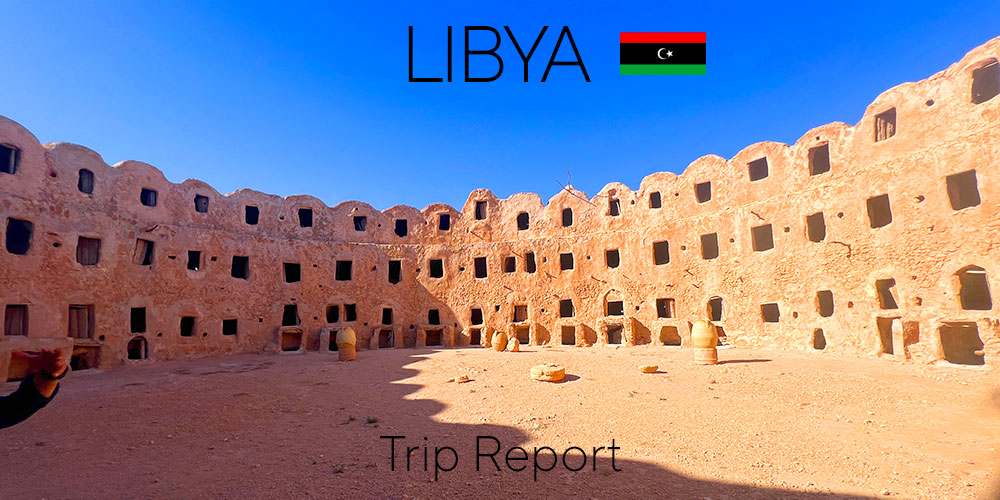
Where: Tripoli, Leptis Magna, Ghadames, Sabratha, Qasr Al Haj, Ras Al Ghoul, Kabaw, Nalut Transport: Airlines, Car Who: One traveler Currency: Libyan Dinar (LYD), U.S. Dollar (USD)
We are publishing the details of this trip soon. Please visit us back, or sign-up for our newsletter (on the right) to get updates on when the trip report is published.
This trip report can also be seen on our story highlights on Instagram account @travelonthedollar.
Click the image on left to go directly to Libya Highlights, or visit our Instagram profile and under ‘Highlights’, scroll to the right and click on ‘Libya’.
Itinerary
Planning Planning & Information Tips, info & details of planning.
Day 1 Tripoli Arriving in Libya, city tour of Tripoli.
Day 2 Leptis Magna Visit the Roman ruins of Leptis Magna.
Day 3 Qasr Al Haj, Kabaw, Ghadames Traditional granaries and onwards to Ghadames.
Day 4 Ghadames, Ras Al Ghoul Old town of Ghadames and desert excursion.
Day 5 Nalut Castle, Tripoli Drive from Ghadames to Tripoli, visiting Nalut Castle.
Day 6 Sabratha Visit the Roman ruins of Sabratha and fly out.
Security in Libya and Eastern Libya
At the time of writing this trip report (November 2024), the security situation in Libya was very stable. Although most western governments warn against any travel to Libya, we did not face any issues, and it was very safe to visit.
Some tour operators offer trips to easter Libya controlled by a separate, parallel government, and it is possible to visit there (Benghazi, Misrata, etc.), whereas trips to the south (Akakus Mountains, etc.) are possible as well. These require extra days and costs a lot more. Contact your travel agent or tour operator for more details.
trip report to Libya, Libya trip report, Libya itinerary, Libya trip costs, Libya places to visit, Must visit places in Libya, How to spend 6 days in Libya, What to see in Libya, Libya tour guide, best tour guide in Libya, Libya tour, places to see in Libya, Tripoli, Leptis Magna, Ghadames, Sabratha, Qasr Al Haj, Ras Al Ghoul, Kabaw, Nalut, Africa travel
Day 1 – Bamako
We arrived in Bamako at about 4:30PM the day before and after a quick drive around, we stopped by a local restaurant for dinner and headed straight to hotel “Immeuble KCF Garantibougou” in the south of the city, close to the airport.
Welcome sign at Bamako city, which was turned off because of lack of electricity in the capital.
Bamako
There are a few sights to see in Bamako, and one of the most significant and striking monument is Monument de l’Independance – built in 1996 with monolithic reinforced concrete, clad in marble, this is an iconic symbol of Mali’s struggle for freedom and self-determination.
Another monument is the Tour l’Afrique or Africa Tower, built in solidarity with the African nations fighting for independence from the French colonial power. The Africa Tower has a museum and stairs leading to the top of the tower from where a panoramic view of Bamako can be seen.
Independence monument
Tower of Africa monument
The Monument de la Paix (Peace Monument) has the shape of an arch, which is actually two hands that are holding up a globe on which a white dove is placed, the symbol of peace, dedicated to the return of the peace in the northern part of the country.
Peace Monument, Bamako
Peace Monument, Bamako
Another striking building is the BCEAO Tower. At 20 stories and 80 meters (262 feet) high, it is the tallest building in the West African region. The BCEAO Tower is the Malian headquarters of the Central Bank of West African States, and is modeled on the Sudano-Sahelian architecture of the famous Mosques of Djenné and Timbuktu. The building is dull orange in color and matches the traditional banco architecture of West Africa, as well as that of the soil in the surrounding area. Its tapered shape resembles a termite hill from a distance.
BCEAO Tower, Bamako
One of the more interesting and retro buildings is the Old Assembly Building of Mali. Not in function anymore, this was the parliament of Mali before the insurgency and now lies in ruins.
Old Assembly Building of Mali, Bamako
Next stop on the city tour of Bamako was the National Museum of Mali (Musée national du Mali) which is a leading archaeological and anthropological museum specializing in African art. The museum offers both permanent and temporary exhibitions that showcase the rich history of Mali, including musical instruments, traditional clothing, and ritual objects from the country’s diverse ethnic groups. The museum grounds also house concrete replicas of important cultural landmarks, such as the renowned mosques of Djenné and Timbuktu.
Taking pictures inside the museum is strictly prohibited and monitored by attendants all over.
Art work in National Museum of Mali, Bamako (Image credit: MoMAA.org)Miniature Djenne Mosque in the grounds of National Museum of Mali, Bamako
Art work in National Museum of Mali, Bamako (Image credit: MoMAA.org)
Typical Malian truck at the National Museum of Mali, Bamako
Another experience to see are the Sand Diggers of Mali (Image gallery) near the Niger river. We did not visit them during our visit to Bamako.
A few other notably places to see in Bamako (which we did not visit) are:
Sacred Heart Cathedral
Bamako Grand Mosque
After visiting most of the sights in the capital city, we headed to Hotel Mande on the banks of Niger river for dinner before heading back to the hotel, calling it an early night!
This trip report can also be seen on our story highlights on Instagram account @travelonthedollar.
Click the image on left to go directly to Mali Highlights, or visit our Instagram profile and under ‘Highlights’, scroll to the right and click on ‘Mali’.
Costs
Note: All values in USD, unless otherwise mentioned, are approximate and based on the exchange rate of USD 1 = XOF 595 at the time of publishing. Each cost is for one adult. Note that the expenses do not include international flights to and from Mali.


 At the time of writing this trip report, Afghanistan requires most nationalities to get a visa before traveling there. There are a few places where you can apply for a visa considering the political situation in Afghanistan, because of which not a lot of countries have diplomatic relations.


 (and American Samoa)